In 2026, this Facts and Fallacies blog site still carries the original 2007 feel—classic design, nostalgic internet vibes, and valuable content that stands the test of time.
Getting cash from your own home appear to be an exceptionally captivating different for everyone that attempting to leave a full day job and begin a different lifetime. The catch is the majority of people working to make more money at home hardly ever make money.
There are various solutions to gain more money, but a majority of seem to be ripoffs.
I’ll teach you a method to generate more money from your home, plus it is not going to cost you any cash.
The strategy I’ll make clear is situated in a method described as affiliate internet marketing. An individual generate income delivering qualified prospects to distinct internet websites. If those qualified prospects end up getting a product or service, you make a money.
If you want to succeed at affiliate marketing, you don’t have to send lots of traffic to publisher websites. Instead of this, your goal should be to send highly targeted traffic to those websites.
The first thing you need to do if you want to earn extra money from home is to find a great product to promote. You should feel comfortable promoting this product. In addition, you must check this product to know of it’s worth promoting. Once you have chosen the product you must gather as much information as you can about any subject related to this product.
The next step is to create a landing page or a blog, which is free. You can start with a free hosting but I don’t recommend you do this. There are really low priced hosting plans out there and if you pay you won’t get banned.
Now that you have a product and a sales page, all you need is to drive traffic to your internet site. It is a crucial job with this procedure. You can begin creating articles and blogs and add your site hyperlink down below in authors resource box. A few content articles might rank quite high in search results and then your revenue is going to be massive. You can also purchase visitors, nevertheless it is based on exactly what service or product you’re associated.
It is a certified method to generate extra cash from your home.Nevertheless it is preferable to begin with lower anticipations. You may not be generating fast money through the first day, but when you simply maintain composing top quality content articles and creating trustworthiness, you will begin to notice leads to record breaking speed.
This review is here to assist you on your thoughts about cash gifting and which is the right choice for you at this moment. Now, I have a lot of individuals asking me questions about cash gifting because they want to join but don’t want their money stolen. I totally understand this situation because once a point in time I got scammed also but through long research and befriending some of the nicest people I thought I never know it turns out cash gifting is not all that bad at all you just have to know what you are doing. the work is very easy and I feel that if a lazy person doesn’t want to do easy work and generate countless amounts of cash I feel they should keep their day jobs or get a job working harder to get absolutely nothing living paycheck to paycheck. with all the stuff it cost to live like lights, gas, water, rent, cable, phone, food etc…I bet one check can’t cover all those. That’s why there are programs for the people needing extra money wanting to work from home and just needing money in general.
.Here is what you need to know about cash gifting and a greatly trusted Money Making program I ran into called TPP
Cash gifting – Many want to really know how to make money online, what is cash gifting and how to join in and get started but they just don’t know which ones are real and which ones are scammers. this process can be very hard for beginners on the internet or to cash gifting or to a computer period. That doesn’t mean be afraid of what is real there are ways of finding out which sites are taking money and which sites are making money. In this article you will learn about cash gifting, how cash gifting works,how to make money fast at home,you wil learn how to make money blogging and how and why it can change your life. When reading this article please try to keep an open mind to what you came to learn and how this helpful information can assist you in the near future.
TPP is a very private group of generous like-minded individuals using the cash gifting conception as a form of increasing and maintaining financial freedom independence and overall a way to a better life. TPP is a unique one of a kind hybrid cash gifting opportunity no matter how real or fake other cash gifting programs are they still cannot top the peoples program.
Ever since November 2008 TPP has been rated #1 cash gifting program out here on the internet today and is still holding down that #1 spot because of their unbelievable, strong, non- budging success over the years. The peoples program is a strong perfect example of what cash gifting is really about and what it should be. unlike other cash gifting programs that compete with other programs and other individuals, worried about failure and getting leads. At TPP there is no competing with any one or stepping on any toes to gain a certain spot inside this program there are equal opportunities for everybody not just one person. Not everyone gets cash gifting and how it really works and if you are one of those people who just cannot understand cash gifting and how it works no matter what you did in the past. you were either probably inside a pyramid scheme and didn’t know it OR you got so over whelmed by the material that you missed important facts and didn’t go back reading and fully comprehending what you read. OR you got scammed or you just wanted a quick way to get some money and thought by becoming a member to the site that you were going to automatically generate money. The truth is if your looking for extra money you have to still put in time and work no matter what you do in life it requires effort. Without that you will not accomplish anything in life. No different from if you were going off to work whether it be by bus or train it requires you to walk to the bus stop and put money on the bus or train so you can get to work and bring home more bacon. same with a car it requires gas money so can get to work..Those were just some examples of efforts being put into play. without making an effort to try to do something you will see no results On the other hand if you do make efforts to do things you will have already accomplished plenty. Since cash gifting is a make money from home based opportunity and requires your full attention when you make extra money online the times you do choose to put some work in. you should really buckle down and focus because you can go real far but it’s all up to you . Newbies just getting started looking for ways to make extra money should put in at-least 3- 4 hours of your time or more needed in order to make fast easy money online. Real work needs to be put into this if are trying to see the same results you were watching on you tube. Seeing those people open up there packages showing you the best ways to get money online like them.
Take note and always keep in mind that the peoples program is way more effective and powerful than many other cash gifting programs on the internet now. Tpp also offers a bonus opportunity inside which is top secret until you become a member and take on this awesome experience for your self.
Until now i never knew what the peoples program truly had in store for me . after doing hard research and getting deeper into the program I started to see what they had to bring to the table and why they were rated # 1 C.G program alive right now. Let me let you in on a few things they have to offer when people join.
first off they have 13 capture pages that are all different and upgraded that will excel your business. hands free turnkey marketing system TPP offers you that basically does 100% of the work for you. just sit back and count money. 365 days a year full training support,even holidays. Residual cash gifts from the works of team members. Weekly training calls and webinars. 10 Gifting levels from $150 up to $10,000 Fully customizable websites that you can add your text, videos and photos on. One time fee of only $50 Admin fee, the most affordable in the industry by the way. And This is just the half of it. once a member you will learn much more of TPP perks as you go along.
What is cash gifting you ask???? Cash gifting is an operation held by individuals that send money to one another constantly. Cash gifting is simply a funds generating program that assists you on creating life-long wealth. The members who already joined convert others into the program to join.Anyone interested in becoming a member just know that with any cash gifting program you will have to pay a small admin fee to join in. Admin fees cover the promotional tools and website cost to keep most things running smoothly. All new members that join have to pay their cash gift amount that will be issued to their sponsors beginning the process of getting you to a more independent comfortable lifestyle.
I truly believe that anyone who is sincere about changing their living situation can prosper with this program. it doesn’t matter if you don’t know much about a computer or internet that’s why they have special tools and how to videos and tutorials to assist you on your venture.
Let Me Tell You why You Could and Should join The Peoples Program. The Peoples Program is highly rated #1 on the internet right now and has been since 2008 assisting average joes like you and i everyday so we can all be successful. Tpp is affordable for most people starting as low as $150 Getting you on your way to accumulating real money on the daily basis.
Many people don’t know that the main ingredients to success with cash gifting is choosing a top rated program. The best team you can seek out on the internet with marketing technique methods that are valid and proven. TPP equips everyone with the right tools in advertising and promoting their business. This program possess every marketing know- how to assist and excel your profit generating retention. The peoples program is very well-known for their most concurrent and contemporary online marketing tools and capabilities that will certainly upgrade your business.
New members to the peoples program will definitely get the max support and training recommended to become as lucrative as you want to be. Accommodated with the best mentors available at your disposal to answer all questions and give you that one on one assistance every step of the way until your ready to fly on your own. MENTAL NOTE: You need your mentors to become successful in cash gifting. Without a doubt they give you full access to the main tool you will using throughout program to dominate, control and achieve your main goals. The training tutorials you read in TPP provides you with pay per click marketing, article distribution, seo (search engine optimization), classified Ad marketing, Email marketing,postcard marketing mentor system, program mentoring and so much more…. with TPP they leave you no choice but to prosper once you are member your in for life or for as long as you say so anyway. just check out a few things you can expect when you join the peoples program in at different levels…
1. Gift $150 and get confirmed at the $500 level 2. Gift $250 and get confirmed at the $1,000 level 3. Gift $500 and get confirmed at the $1500 level 4. Gift $1,000 and get confirmed at the $ 2,500 level 5. Gift $1,500 and get confirmed at the $ 3,500 level 6. Gift $2,500 and get confirmed at the $5,500 level 7. Gift $3,500 and get confirmed at the $10,000 level
Not to shabby at all especially for newbies whether your new to the computer or internet world you can accomplish this and all they ask is for your time they meet all the members needs anyways. I can truly say that anyone looking for a GREAT stream of money to come in every week consistently should try The Peoples Program it’s a great way to start generating excellent cash-flow to your home. you will have more time to do the things you want to do without keeping up with some job schedule, a mean boss,taking pay cuts, getting laid off and ignorant employees who would do and say anything just to get to the top. Be your own boss and create your own wealth because it is possible…
We’re big fans of online movie clips site Movieclips.com, which launched in 2009 as a search engine with over 20,000 different clips from thousands of titles from the libraries of 20th Century Fox, MGM, Paramount, Sony Pictures, Universal Pictures and Warner Bros. Pictures. Today, the company is announcing that it has raised $7 million in funding led by MK Capital (a founding investor in Machinima, a large gaming publisher on YouTube). Shasta Ventures, First Round Capital, Richmond Park Partners, Jeff Clavier, Naval Ravikant, Jeff Kearl, Tom McInerney, Allen DeBevoise and Gordon Rubenstein also participated in the round. But that’s not all. Movieclips is announcing a lucrative new, Vevo-like deal with YouTube, to bring all of the startup’s licensed Hollywood HD movie clips to the online video platform.
As you may know, along with the studio partnerships (which is half the battle for licensing movie content), Movieclips has also developed proprietary technology that assigns up to 1,000 points of data to every scene, making it super easy to find scenes by actor, film title, dialogue snippet, mood, director, genre, etc. This data enables people to search and discover movies through curated lists and games. Last year, the startup launched a new product, called Movieclips Mashups, at TechCrunch Disrupt in New York, which allows anyone to make montages of two minutes clips.
Co-founder Zach James tells me (checkout our TCTV interview with James on the news) that the goal was to sign a distribution deal to upload the clips to YouTube, with the blessing of the studios, which are notoriously protective with their movie content. Especially on public sites with tons of traffic, such as YouTube. In the same way that Vevo was able to partner with record labels to put music videos on YouTube, Movieclips is working to put film and movie clips on the video platform.
But James said that surprisingly, most of the studios were receptive to the idea of posting the clips on YouTube. Co-founder Rich Raddon explains, “There’s definitely an openness with the studios that has not been there before. Now that YouTube is looking for premium content partners, studios who would have laughed us out of the room a few years ago are actually listening. It’s all about the right timing.” Raddon says Disney was the only major studio that did not participate in the Movieclips deal.
So now, Movieclips will have a number of dedicated channels (found here) on YouTube, with breakdowns of clips by actors, movie types, genre, director and more. Clips will be able to be viewed anywhere YouTube is viewed. The company will also be adding interactive games, trivia challenges, clip mashups, trailers and clickable video formats. The clips will also be featured in the Movie Extras on the YouTube video on demand platform.
All videos will include some form of advertising, whether that be a pre-roll or other format. While Movieclips declined to give us the exact revenue share from the deal, we know the startup will take a portion of revenue, YouTube will take a portion, and the studios will take the largest portion of revenue generated.
Camille Hearst, YouTube's Product Marketing Manager for Music, Movies, and Shows, said this of the Movieclips deal, “There's a sea of content that can add to a YouTube user’s movie experience thanks to Movieclips.com…We're excited to be working with Movieclips.com to provide users with exactly what they’re looking for when they want to get more into movies on YouTube."
As a side note, James tells us that he originally floated the idea out on-stage to Google VP Marissa Mayer while the company was presenting during TechCrunch Disrupt in May 2010. Apparently Mayer (and YouTube) were listening.
Considering Vevo’s success following the YouTube deal, this is a pretty big deal for Movieclips. Hopefully the startup will generate major cash from the deal, but the distribution platform alone is extremely lucrative in terms of generating views and for brand exposure. Vevo is seeing around a billion views a month and bringing in tens of millions in revenue.
As for the funding, James says that the new funds will be used to ‘double down’ on the YouTube opportunity. The company is also looking to expand into incorporate Movieclips into mobile and social platforms, including Facebook, Twitter, and the iPad (The site also launched a specialized video player and features an API developers can use to integrate Movieclips on other sites; AOL's Moviefone actually uses the technology on its platform).
Launched in December 2009, MOVIECLIPS.com is an online video destination offering audiences the largest and most diverse collection of movie scenes. MOVIECLIPS.com allows fans to find, watch and share...
General Electric Co. (GE) bought a minority stake in the California-based solar company eSolar this week. As a result of the deal, Paul Browning, President and CEO of Thermal Products for GE Energy, will join eSolar’s Board of Directors.
ESolar already had a licensing agreement with GE Energy, which granted it exclusive worldwide rights to eSolar’s modular technology for its Integrated Solar Combined Cycle (ISCC) power plant solution. This solution, when combined with GE’s own “FlexEfficiency” 50 Combined Cycle Power Plant technology, is able to deliver fuel efficiencies over 70%.
In less technical terms, this means that GE believes the combination of technologies – natural gas and solar – is the best solution for renewable energy. This combination will ultimately prove to be the most efficient, most flexible and most affordable solution, for addressing the global issue of climate change, the company stated in its release, (using more complicated phrasing, of course).
Hybrid Solar Power Plants
During the day, these “hybrid” plants work by using the sun’s heat to generate steam for the water-steam system which generates the electricity. This is done through the use of small, flat, pre-fabricated mirrors which reflect heat back to a tower-mounted receiver. Natural gas is not used during daylight hours. But at night, or during periods of cloud cover, the plant will then use natural gas.
GE’s rights to the ISCC technology currently exclude China and India, but the companies say they are now targeting Europe, Africa, the Middle East and the U.S.
ESolar was created in 2007 by Idealab founder Bill Gross, with the goal of using pre-fabricated form factors in combination with advanced software systems to deliver cost-competitive solar energy.
eSolar has developed a solar thermalpower plant technology. eneration can be scaled from 46 MW to over 500 MW. eSolar's modular, scalable power plant architecture enables custom built...
Seagate has just announced that they’ve sold their 1 millionth Momentus XT hybrid solid-state/mechanical hard drive, an interesting development for the hard drive manufacturer especially considering the rise of expensive SSD drives. These hybrid drives run at 7,200 RPM, nearly twice as fast as standard mechanical drives. The drives contain some solid-state memory as well as a full mechanical drive and offer speed improvements at a very low initial cost.
The Hybrid drive is an interesting technological advancement. It’s cheaper than a full SSD drive but thanks to a 4GB cache you can read and write to the drive – at least in theory – nearly as fast as you can with a SSD drive.
To be clear, this isn’t a full SD drive. The speed savings are eventually reduced by the dependence on mechanical parts, but the price – about $99 for a 500GB model – is pretty good for a 7,200rpm drive.
Social groupware platform GROU.PS has just introduced several new features, the most notable of which is a Facebook template called “theBook” that lets you create your own private network with the same look and feel as Facebook.
According to GROU.PS founder Emre Sokullu, the use of the template has already increased the engagement rates within groups by over 50%.
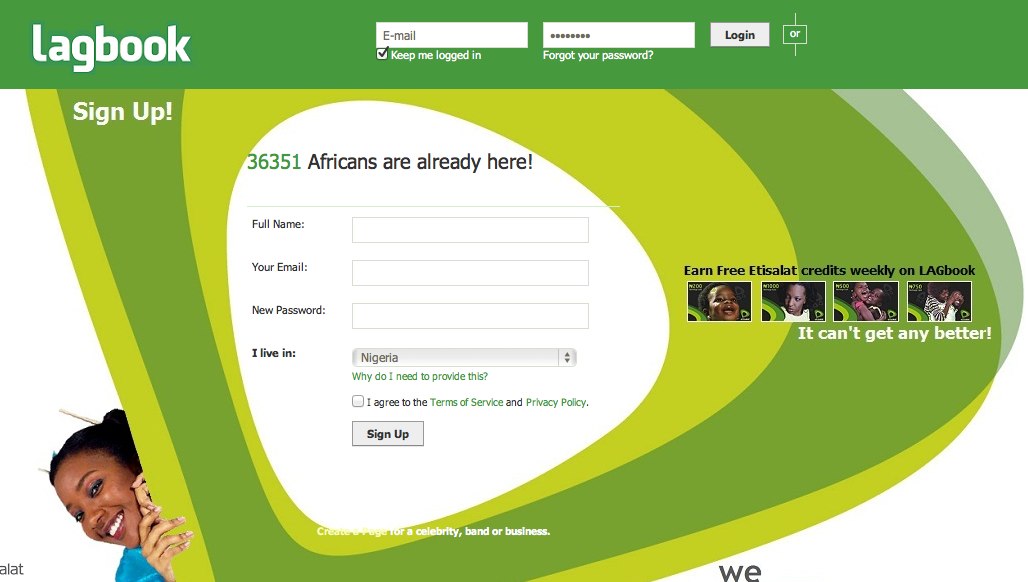
The template’s addition was inspired by one of the company’s private groups, Lagbook, which uses a similar template to create an African-based social networking site. The group grew to 35,000 members in just six months, Sokullu said, after implementing this design.
There will be “social” designs on their way in the future, to complement the Facebook template. However, the upcoming templates will be more original, admits Sokullu.
I’m Sorry, But is that Legal?
Of course, our first question, in seeing this new “theBook” template was about copyright issues. After all, isn’t that Facebook’s design?
Sokullu said he didn’t think there would be a problem. Zuckerberg is a friend, he joked. In all honesty, he believes that the Facebook design is so ubiquitous now, it should be considered public domain. We’re not so sure Facebook will agree.
But if there’s a problem, Sokulla said he will pull it.
Hmm, copying Facebook…sounds like a way to get some easy press. Oops!
White Label Mobile App
GROU.PS also just launched a mobile application generator for use by its over 200,000 social network creators. The mobile platform is available to those on the company’s $29.95/month Platinum plan.
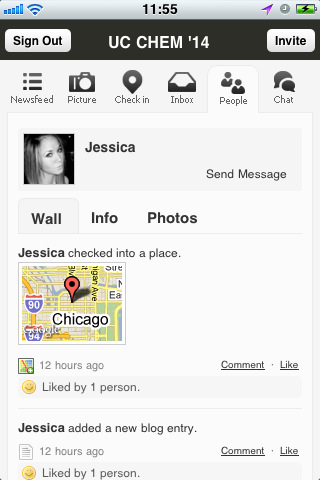
The app, which is like a white-labelled Beluga or GroupMe, lets members post status updates, chat, share photos, check in to venues, see who’s nearby and more. Members can also login using their Facebook account for easy access.
A future release will add support for events and push notifications.
For now, the white label option is available on Android and BlackBerry only. The iPhone/iPad app is branded “GROU.PS” instead.
GROU.PS has undergone several transformations in recent months. Last fall, it acquired Flux Networks, which runs Social Project, the backbone for many brands’ social platforms including MTV, Comedy Central, The Daily Show, Atom and TeenNick. It also repositioned itself as a SaaS business and introduced premium pricing plans.
The company, backed by Golden Horn Ventures, now has over 9 million registered users worldwide and more than 5 million monthly uniques. It also just completed an undisclosed round of financing.
Many of the best collaborative web apps are scattered across a number of different sites, making integration difficult. Grou.ps is attempting to solve this problem by offering a...
The FCC has just informed good ol' big blue that its proposed acquisitions of T-Mobile and Qualcomm's 700MHz spectrum will be reviewed together, rather than as separate transactions. This wouldn't really be a big deal except for the fact that AT&T may be biting off more than it can chew. By reviewing the two proposed acquisitions together, the FCC is forcing AT&T to justify such massive purchases of spectrum.
In a letter to both AT&T and Qualcomm, the FCC writes: "The Commission's ongoing review has confirmed that the proposed transactions raise a number of related issues, including, but not limited to, questions regarding AT&T's aggregation of spectrum throughout the nation, particularly in overlapping areas. As a result, we have concluded that the best way to determine whether either or both of the proposed transactions serve the public interest is to consider them in a coordinated manner at this time."
Well, AT&T may not be too happy to hear that, but we're glad the FCC plans to proceed with caution. The acquisition of these companies' spectrum is a coordinated effort by AT&T. That's not to say that AT&T has some evil genius plot to screw us by taking over the world one spectrum acquisition at a time, but more that these purchases could inadvertently disrupt innovation, raise prices, and a bevy of other fateful consequences.
Then again, the acquisitions could just lead to my AT&T iPhone getting some service for a change.
T-Mobile is a mobile telephone operator headquartered in Bonn, Germany. It is a subsidiary of Deutsche Telekom. T-Mobile has 101 million subscribers making it the worlds sixth largest mobile...
In July 1985, seven industry veterans came together in the den of Dr. Irwin Jacobs' San Diego home to discuss an idea. Those visionaries—Franklin Antonio, Adelia Coffman, Andrew Cohen,...
Today, Nielsen announced it’s acquiring Marketing Analytics, Inc., a leader in analytics and advanced planning software. The company currently has 52 employees, all of whom will join the Nielsen team. The deal also involves the acquisition of other assets, including software and ongoing client projects.
The acquisition’s goal is to enable Nielsen to better provide marketers of consumer goods with the “most complete and timely view of the impact of media and marketing,” the company says in a release. This would be a distinct advantage when developing marketing plans across channels, including online and offline ads, in-store promotions, and consumer promotions.
"Fast moving consumer goods marketers require advanced, real-time, predictive analytic insight,” said John Lewis, president and CEO, Consumer North America, Nielsen. ”By combining Nielsen's global reach with Marketing Analytics' expertise and advanced modeling and scenario planning applications, we can drive increased value for our global clients seeking the optimal marketing mix and spending level to maximize their sales."
Marketing Analytics, founded in 1991, is headquartered in Evanston, Ill. It has historically helped companies measure their marketing plans’ impact by combining deep modeling with expertise in software applications.
The Qosmio F755 3D laptop is now available for those who wish to live in the 2D world but – and only occasionally – may also want to view things in 3D. The laptop uses a “15.6-inch diagonal full HD TruBrite® display with Active Lens” to display both 2D and 3D images (sample shown here may not represent actual display, your results may vary, consult a doctor before playing 3D games, 3D gaming could cause headaches, nausea, a feeling that 3D is BS, the croup, accidental ingestion of your wedding ring, dance, Gary Oldman’s Disease, vestigial tail growth).
The laptop runs a Intel Core i7 processor and NVIDIA GeForce 540M and allows for HD video and Blu-Ray playback.
The laptop will start at $1,700 when it is available mid-August. Click through for the full press release.
Toshiba Ditches the Glasses with Announcement of World's First Glasses-Free 3D Laptop
Qosmio F755 3D Ushers in New Way of Experiencing 3D Entertainment; First Laptop to Simultaneously Display 2D and Glasses-Free 3D Content on a Single Screen
IRVINE, Calif.–(BUSINESS WIRE)–Toshiba's Digital Products Division (DPD), a division of Toshiba America Information Systems, Inc., today announced U.S. pricing and availability for the Qosmio® F755 3D laptop, the world's first laptop capable of displaying glasses-free 3D and 2D content at the same time on one screen1. Beginning in mid-August, 3D entertainment enthusiasts will have the opportunity to "ditch the glasses" and enjoy the latest in 3D content while enjoying all the amenities of a premium, high-performance laptop.
"The Qosmio F755 3D laptop is not just a breakthrough in mobile entertainment, but a great example of Toshiba's ongoing commitment to turning technology innovation into real, usable products" "The Qosmio F755 3D laptop is not just a breakthrough in mobile entertainment, but a great example of Toshiba's ongoing commitment to turning technology innovation into real, usable products," said Carl Pinto, vice president of product development, Toshiba America Information Systems, Inc., Digital Products Division. "We are excited to bring this cutting-edge technology to consumers, as there's really nothing like it. The unique capabilities of the laptop's 3D display make enjoying 3D content both convenient and hassle-free. It's like nothing you've ever seen before."
A Breakthrough in Consumer 3D Technology
To achieve a 3D viewpoint without the aid of special glasses, the new Qosmio F755 3D laptop uses the latest in auto-stereoscopic display technology. Equipped with a brilliant 15.6-inch diagonal full HD TruBrite® display with Active Lens technology, the double parallax image display is able to project two sets of images at the same time, splitting them between the left and right eyes to create the 3D effect. Toshiba's intuitive Face Tracking technology then taps into the laptop's built-in webcam to further perfect the projection of the image by reacting to the motion and position of the viewer, delivering a broad viewing zone from which to view 3D content. The end result for consumers is the ability to view and enjoy real 3D – no glasses needed.
2D or 3D? The Choice Is Yours
The Qosmio F755 3D laptop offers up two displays in one, giving users the freedom to view content in either 2D or 3D – or both at the same time. As the only laptop of its kind to offer a simultaneous viewing of 2D and 3D content on a single screen, it provides users with the option to watch 3D content in a full-screen or condense it to a smaller window, preserving the 2D desktop to browse the Web or do other tasks. The included Toshiba Blu-ray Player2 adds to the laptop's flexibility by delivering easy "one-click" 2D-to-3D content conversion3 for DVDs and videos, giving users the opportunity to enjoy the latest Blu-ray™ 3D movies or experience their existing 2D movie library in a whole new way.
Robust Performance for Demanding HD Entertainment
In addition to its 3D capabilities, the Qosmio F755 3D is equipped with the latest in processor technology and premium components. Powered by the visibly smart Intel® Core™ i7 processor4, NVIDIA® GeForce® 540M graphics processor5, as well as fast RAM and a spacious 750GB hard drive6, the Qosmio F755 3D laptop is built to deliver robust multimedia performance. Built-in harman/kardon® speakers, a suite of sound enhancement technologies from Dolby® and Waves Audio deliver booming cinematic sound to movies, music and games. An integrated Blu-ray Disc™ rewriteable drive offers record and play capabilities, while an HDMI® port supports output of video (up to 1080p) to a 3D-ready TV or display. An elegant Fusion 3D Finish in Brilliant Red delivers standout styling.
A new Google Group called “London Riots Facial Recognition” has appeared online, in the wake of the riots that rocked the U.K. capital over the weekend. The group’s goal is to use facial recognition technologies to identify the looters who appear in online photos.
The group appears to be thoughtfully considering its actions, in threads titled “Ethical Issues,” and “Keeping Things Legal,” for example. They’ve also stated that “it’s important we only use legal sources for images.”
However, there’s a major “creepy” factor to this undertaking, too. The idea that a group of people would team up online to use (misuse?) facial recognition technologies in this way, notably outside professional law enforcement channels, seems like a modern take on vigilante style justice, where the torches of the angry villagers have turned into APIs and algorithms.
In one newer thread, started just this morning, a commenter offers their assistance in building a tool using the Face.API, which could help identify people in photos posted on Facebook, Flickr and Twitter. There is even talk of using the Facebook Graph API and the Twitter API in conjunction with the Face.com one to help better identify the criminals.
While clearly, we have nothing against criminals being brought to justice, there still may be some concerns involved with this type of online behavior. As argued here on Hacker News, this method could incriminate people who were not participating, but were bystanders, or simply trying to get home. Whether their actions here are legal, whether or not they involve public photos, the question is – do we want to crowdsource justice in this way?
SinglePlatform, a startup that helps local businesses create websites in minutes, has raised $3.25 million funding led by DFJ Gotham Ventures with participation from New World Ventures, First Round Capital and RRE Ventures. This investment brings the company's total funding to $4.45 million.
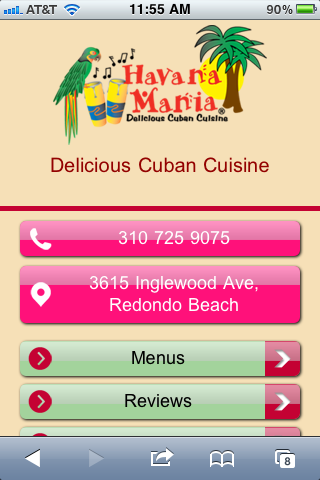
SinglePlatform operates as a ‘one-stop’ platform for local businesses to manage their web presence, allowing them to integrate their websites, Twitter, Facebook and more easily. Local businesses are also able to publish their specials, events, menus, photos and more. Plus, SinglePlatform’s website creation tool automatically creates a mobile-optimized site.
Another bonus to using SinglePlatform is that businesses can publish their listings across a publisher network that includes 11,000 mobile applications, 34,000 hotels, 620 universities, data providers, and travel and food specific destination sites.
As more local businesses need a presence online and on mobile phones, an easy to use offering like SinglePlatform is sure to be popular. Currently, thousands of restaurants across hundreds of markets are using SinglePlatform to manage their digital presence.
This is actually a market where Google is also trying to gain business. The search giant is actively encouraging businesses to create both a mobile and web site to create a digital presence.
Nearly 89% of consumers have researched a restaurant online prior to dining there, however only a small percentage of websites have up-to-date restaurant information. Restaurants recognize that they need...
This is a guest post by Mark Suster, a 2x entrepreneur turned VC with GRP Partners where he focuses on early-stage technology companies. Read more about Suster on his startup blog and on Twitter at @msuster.
Venture Capitalists typically have partners’ meetings on Mondays. Why is that? Who knows. But probably because as a group we travel a lot. So the industry formed around a day of the week when all partners could avoid having company board meetings or traveling.
Yesterday was a Monday. And not a pleasant one.
Rewind. When I first got into the industry it was 2007. Valuations were enormous relative to progress in companies. Web 2.0 was still a term being bandied about. Companies with less than $2 million in revenue were asking for $50-60 million valuations and getting them. My partnership was pretty bearish and scratched our heads a bit at price tags.
It was a great learning time for me. I spent my days meeting companies, figuring out what areas of the market interested me and trying to get a sense for how VCs thought about fair valuations. I thought about things I never had to as an entrepreneur: check size, ownership percentage, deal stage, portfolio construction and risk.
2008
By 2008 I had gotten more serious about championing companies through our investment process. I started showing my partners more deals that I found interesting and doing loads of analysis on the future of markets I thought were ripe for disruption.
I have always believed that TV was ripe for disruption. The parallels to the music industry are too obvious even though the industry players, the medium and the cost structures are different. US TV advertising is $60 billion in its own right. I had found my industry and a deal I really liked in it.
I introduced my partners, we spent weeks with the team and felt good rapport. And just when I thought I had the deal that was worthy of bringing to the investment committee the world changed. It was September 2008. The market had tanked. Lehman Brothers had filed for bankruptcy. It was many events that led to the crash but perhaps this was the pin that pricked the market.
The following is a 2-week graph of the end-of-week price of the Dow Jones Industrial Average (DJIA) in Autumn 2008.
And while the market was off 24% in two weeks, it’s worth remembering 2 other things
The market was actually off 40% from its Oct ’07 peak
The market wouldn’t bottom until Mar ’09. On Mar-6 it hit 6,626 or 53% off its peak
We thought the following:
No new deals close until we figure out WTF is going on with the market. We need some visibility.
Let’s review all of our existing investments. Let’s make sure each has enough cash. Cut where needed. Finance where needed. Anyone not going to make it?
Who has deals in process? Let’s help get their funding get finalized or the company sold if it’s already in play.
Fawk, man. This is really bad. Depressing. Harrumph.
It felt awful. Kind of like you felt as personal investors, no doubt.
My deal got dragged out and eventually never happened. Mostly we got to see the team operate in stressful times and that changed my perspective on the deal. I need leaders who manage in good times and bad. To build a large company you need to manage through economic cycles.
2009
Come 2009 we felt really bullish about the future for startups because the froth was gone and so, too, were wantrapreneurs. The people left standing had a compelling vision to build companies and we backed many in 2009.
When this period was fresh in September 2009, I wrote a very detailed assessment of what I thought had just happened.
Companies raised too much money in 2005-08 and had high burn rates
VCs were very active in this period
When the market tanked they had the “triage problem” – which portfolio companies to save, which to kill
So no new deals got done. Everybody focused inwardly
And VCs scrambled to raise their own funds. Making even less time for new deals
VCs hate downrounds to even good companies struggled to raise money
But by late 2009 life had started to return to normal
Eventually you have to invest. It’s your job. You don’t get paid to sit on the sidelines. So when the market started showing good signs (iPhone, Facebook, Zynga, Twitter, stock market growth) it was happy days again
M&A returned. For the same reasons. You would think it would be better for M&A to be more active when the markets are down – better prices. But I guess you could say the same about VC.
So I encouraged entrepreneurs to think about raising their funds as quickly as they could because
Consumer spending 70% of the economy and vulnerable (wealth effect, build up debts)
Unemployment likely to rise
Risks of these two factors to the stock market
Stock market declines would bring back dog days of VC
The full articles are linked below. If you want a comprehensive summary of the industry in this era it’s worth a read:
In particular part three talked about what happened if we saw a double dip in 2010-11 or a “lost decade.”
2010
We did not see a double dip or the drying up of VC funding. In fact, fundings boomed as you know. 2010 was the year of the “super angel” and 2011 has to date been the year of unbelievably highly priced B,C & D rounds of venture capital. The so-called “billion dollar club.”
Fast forward a year to September 2010 and I wrote my treatise on the 2010 economy. It has some detailed charts you may appreciate if you’re wanting to understand the current economic situation. I show charts on housing, structural unemployment, home equity re-financings that we spent meaning less spending power post crash, new housing sales, debt-to-income ratios, public-sector job problems that will cause crises in cities and states across the US.
Summary version? No chart was good.
At least you can’t accuse me of being inconsistent. My year-over-year summary sounds very similar upon re-reading them.
2011
I have a young entrepreneur friend who IMs me a lot. He was working on a VC round in the early Summer. He pinged me for advice. I told him (verbatim), “close your round by August 2nd. After that, all bets are off.” He’s literally on IM right now in my other browser tab saying, “you called it.” I can’t say his name yet because he hasn’t announced funding. But he got it done. Maybe he’ll reveal our conversation when he announced.
I told another friend the same. He’s still optimizing on price and hasn’t accepted his term sheet. It expires this Friday. I wonder what will happen. I guess in part we’ll see how the stock market plays out this week.
August 2011. What’s happening?
The fundamentals in our economy are mostly not on more solid footing than when I wrote the posts in 2009 and 2010. On the positive side, corporate profits are up, their balance sheets have been repaired and they have recapitalized themselves to have lower amounts of debt relative to equity. Not just tech companies but industrials, too.
But you’d have to be a pretty heads-down coder to not have noticed the past 2+ weeks in the DJIA.
Most of the informed people I know are telling me that the sharp sell-off has more to do with European national debt (PIGS as it is called: Portugal, Italy, Greece & Spain) than the current US dilemma of a S&P downgrade of the US government debt. But it must also be on the minds of investors that perhaps the flu will end up on our shores, too.
I know that investors must also be aware of the civil unrest in the UK. Yes, it seems to largely be thugs. But social unrest is created in harsh economic times and we’ve seen this in Greece before. Expect it to spread. It does weigh on the mind.
And while I cannot tell you for sure what was going on in VC partner meetings across the world today – I’m a data point of exactly one – I think I have a pretty informed guess. And depending on which way that economy heads I can tell you what the story in entrepreneur land *might* be in 60 days, “funding is getting harder, valuations are slipping, companies are running out of cash, M&A is slowing down.”
So let me give you the news 2 months early. If the economy and the stock market continue to languish that’s exactly what’s going to happen.
I’ll bet most partners’ meetings this week consisted of looking just a little bit closer at the cash needs of their portfolio companies – making sure they’re “fully funded.” I’ll bet many of them did a review of their “investment pace” as in – how quickly should we be investing. I’ll bet many did a slow roll on deals that might have gotten approved today. Not a “no” but not yet a “yes.”
It’s impossible to sit in a partners’ meeting on a day like today without having an iPhone on watching the stock market free fall and no matter how much of a public tech cheerleader you are – privately I guarantee there was much concern.
If we do head South it will take a few weeks or months until the memos to portfolio companies get published and the Powerpoint presentations get sent out. But the internal conversation started today – trust me. VCs will take a “wait and see” approach right now. Don’t want to call it either way. It’s too early.
Me? I feel confident telling you to, “Watch your pennies. Raise your money. Don’t spend like it’s 1999. If we’re not heading for a double dip recession at least you’re still being prudent.”
Maybe we’ll bounce right back? Anybody who says they know for sure one way or the other is a bit of a shaman. But I have to imagine the speed and severity of the stock market decline and political instability will likely weigh on investors for some time to come – even if we rebound.
And I’ll tell you what worries me: Jobs, growth & political malaise. And don’t think tech will remain immune.
1. Jobs I’ve been parroting this for 2 years. We have a two-track economy. We have the inability to hire engineering in Silicon Valley or brand sales people in NYC but the country still has very high structural long-term unemployment. Check out the graph below from the Economist magazine. It plots employment changes from the peak GDP quarter of the previous boom. What you’ll see is that it takes about 2 years to recover jobs from the normal recessions of the past 50 years (as if there was a “normal.”)
This recession? We’re 2.5 years in and still down 5% from the peak.
What gives? I’m guessing many of these jobs ain’t coming back any time soon. The last big recession was in the early 90′s where IT and globalization were in their infancy in terms of impact. We need a plan to replace these jobs long term. That can only come through education, training and investment in regions of the country that are not IT centers. There’s no band-aid solution and no quick fix.
Whatever you think about tax policy, I’m certain that it’s not driver one way or the other to fixing this problem. Anyone who says it is a driver is selling you political malarky.
We gotta fix jobs.
2. Growth The story here is no different.
My message to entrepreneurs has been, “It’s coming soon to a theater near you.” You know – the “butterfly effect” on a local and tangible basis. Consumers hurting in Detroit or Biloxi will not continue to spend money they don’t have and income they’re not earning. It will impact retail. It will impact brands. These companies advertise. On your tech platforms. These consumers buy iPads, iPhones, Androids. You’re counting on them for up-sells to your app. For buying virtual goods. You need consumers – they’re 70% of the economy.
Trouble is – they don’t have jobs. Those that do still have too much debt. Their 401k ain’t what it once was and it just got whacked again. They still have too much personal debt. And the equity in their house isn’t rising. They’re doing what economists call “de-leveraging,” which means spending less, saving more.
And you don’t see it. You don’t see it because the world you likely live in if you’re reading this has been booming. And even if you’re not physically in a booming tech market you’re likely in the market spiritually, metaphorically. You’re reading TechCrunch, aren’t you?
3. Political Malaise I think here I’ll just quote myself from my analysis a year ago to avoid sounding like I’m jumping on the bandwagon of this week’s quarterback analysis:
“While there was a momentary unity in the US government for bailouts & stimulus spending that were initiated in the Bush administration (many people conveniently forget this now) and continued under Obama, it is clear that this era of consensus is over. Keynesians will argue that this is a bad thing and fiscal conservatives will argue that it is a necessary discipline.
Either way, the gridlock that is now the US congress will prevent any real economic responses and it seems likely that this political malaise will last beyond the 2012 election as the Republicans look to make big gains in the 2010 mid-term elections.”
Maybe the stock market drop will bring some clarity to congress. Maybe it will bring some bi-partisan spirit to solving the nations problems. Maybe. But evidence seems to the contrary. Right now people seem to be angling more around November 2012. And that sure sounds a long way away to me.
What does this mean for the tech and VC markets?
I’m characteristically still bullish on our long-term trends for companies who get through the toughest times. Here’s what I know:
Television will be consumed dramatically differently in 10 years from now than it is today. Creative destruction will continue to create opportunities for people who understand the deflationary economics of the Internet. I’m long.
Cash will continue to become less relevant in 10 years as electronic & mobile commerce continue to proliferate and new technologies like NFC drive change. I’m long on payment technologies.
Computing will be an order of magnitude more mobile 10 years from now, changing the way applications are delivered and the way we interact with our real social networks. I’m long Mobile. And Social.
Businesses will continue to realize that the Internet is one big information utility and will continue to move operations to the cloud. This will create whole new segments of the tech market for databases, data-as-a-service, real-time information processing, cloud mapping & visualization technology, etc. I’m long the cloud.
Venture capital is an industry best served up from 7-year aged casks. As many people have said, “We over-estimate the impact of technology in 3 years and under-estimate the impact in 10 years.”
Make sure you’re still here in 10 years. Get yours. Then go build your companies.
The company, which has growing operations all over Latin America as well as in Spain and Italy, has raised the fresh capital from all its existing shareholders: Nauta Capital, Caixa Capital Risc, private investors Lucas Carné and José Manuel Villanueva as well as VC firms General Atlantic, Insight Venture Partners and Index Ventures.
You've heard of the CSI effect, right? It's this wacky "syndrome" whereby we've watched so much CSI Miami and Law and Order that we can't fully put our weight behind a verdict without some solid DNA evidence. I guess it's easy to forget that we had an entire legal system sans DNA for quite a while. In any case, we've apparently got an itch to be a bunch of white-coated forensic scientists, which is why we're so lucky that this crazy, and also beautiful, machine exists in the world.
It's called OpenPCR, and it'll make science-style DIYers drool. PCR stands for polymerase chain reaction, and it's a crucial tool for just about any type of modern molecular biology. The way it works is by amplifying a specific region of a super teency-weency strain of DNA, and after that I kind of got lost in the biological jargon, but it's all explained here.
With OpenPCR, you can do two different types of tests: DNA Sequencing and DNA Barcoding. Sequencing is where you use the PCR machine to check out some of your own genome, while Barcoding is checking out what kind of species a certain bit of DNA belongs to. If you have yet to be convinced, just check out how these two girls used DNA Barcoding to uncover a New York City scandal (hint: 2 out of 4 Sushi restaurants and 6 out of 10 grocery stores were selling mislabeled fish.)
For $599, you'll get all the parts to the machine, instructions to set it up, and 16 PCR samples — the way by which you target certain regions of the DNA. Features include a heated lid that eliminates condensation, 2-degree per second ramp time (Centigrade), and compatibility with Mac and PC.
DudaMobile just launched a new, self-serve platform that lets existing website owners create a mobile version of their site just by typing in the website’s URL. The service, targeted towards small business owners and other professionals, includes one-click website conversion, auto sync between the main site and the mobile site, plus mobile-friendly features like a click-to-call widget, a maps and directions widget, an SMS widget for texting business info, Google AdWords support (soon) and mobile analytics.
DudaMobile Today
Currently, the company has over 175,000 websites hosted on its platform, 35% of which are small business sites. And users are creating 25,000 new mobile sites each day, we’re told. The majority of these sites were created prior to the self-service platform’s launch, with help from existing DudaMobile partners, including Webs.com, Logoworks by HP, and a major U.S. mobile operator which the company can’t publicly name. The company has also just partnered with Yahoo and Eniro, with those integrations rolling out now.
When DudaMobile’s platform is used by partners in some cases, it’s integrated into those companies’ own backend website creation platforms. That means anyone who builds a site using the partners’ tools can immediately create a mobile-friendly website at the same time. In other cases, it’s a white label deal.
Freemium Package
Now, that same feature set is available to anyone as a freemium offering. The resulting mobile site works on all smartphones, including iPhone, Android, BlackBerry and Windows Phone. DudaMobile provides dozens of design templates, but if you happen to know CSS and HTML, you can further customize the site to your liking. WordPress sites are supported, too.
Free plans include 10 pages, 500 MB of bandwidth and are ad-supported. Professional sites are $9/month, offer unlimited pages and bandwidth, your own mobile URL, and are ad-free. Only Professional sites have access to the above-mentioned widgets, but both both versions include analytics.
DudaMobile says its current users are seeing up to 40% conversion rates on the mobile sites’ click-to-call widgets, and among certain business categories, like taxis and restaurants, it’s as high as 50%.
There are a lot of free and paid mobile website builders out there, including one from Google itself, but DudaMobile’s service is unique because it automatically syncs content from your desktop website to the mobile version as changes are made.
DudaMobile is a platform to create highly tailored mobile websites by leveraging existing Internet websites, quickly and cost-effectively. The unique advantage of using DudaMobile is that it keeps a...
GameFly just made the first step towards a future void of physical media with the pre-announcement of an upcoming digital gaming distribution platform. The announcement is missing any real details, including the service’s name, but it’s said to launch this coming Holiday season.
This service will allow GameFly subscribers to buy Windows/Mac games rather than just renting as usually done through GameFly. This brings a whole new level of use to the GameFly service, which is currently the Netflix of video games. The upcoming computer client is more than just a retail outlet, as well. News, trailers, and video clips will attempt to make the program relevant in the crowded niche market currently dominated by Valve’s Steam digital distribution platform.
Sean Spector, GameFly’s co-founder and SVP of Business Development and Content, “We’re thrilled to bring digital to the gaming consumer in a meaningful way, as no other service or retailer brings physical and digital gaming together like GameFly.”
A closed beta will launch at a September 8, 2011 Los Angeles event. All attendees will receive a beta code for themselves and a friend. Beta codes can also be obtained at the service’s landing page because, you know, not everyone can make it to LA.
This service joins Steam and the EA’s recently launched Origin platform. Before Origin launched just a few months back, Steam was sitting pretty atop the digital distribution mountain. Now, with Origin and GameFly’s service, Steam better start building fortifying its position; the clones are coming.
GameFly rents and delivers video games to customers via post mail, following the Netflix model. For a flat monthly fee, users can rent as many games as they want...
A new startup called Pago is launching today, and if you live in Mountain View your life may have just gotten a lot easier. You can now go to more than 50 local merchants– coffee shops, dry cleaners, bars and the like– and order what you want from your smartphone, pay for it, and then skip the regular line to get it. It aims to bring Web-efficient check outs to the real world. Clearly anyone who spends their day chronically late (like me) would love this.
There are two potential problems. The first is that founder and CEO Leo Rocco may have taken that whole adage of building the company you’d like to see in the world a little too literally. He lives in Mountain View and today his routine will get a good deal easier. But what are the odds Pago lasts long enough to sign up my favorite coffee shop, dry cleaner, and ice cream shop? Or yours? Saying you are going to follow people through their day seems an almost impossible claim to deliver on given how different each of our daily routines are.
The other issue is that Pago is positioning itself as a payment platform first and foremost, and that’s one crowded space. Is Pago clever but just too late to the local party?
A place in my neighborhood that could desparately use something like this is trendy ice cream shop Humphry Slocombe. There’s a line halfway down the block most days, usually the result of people trying different flavors at the front of the line and agonizing over which one to get. A system for quickly serving customers who already know what they want seems a win-win for the store and its patrons. But Humphry Slocombe already uses Square as its main payment system. Is it likely to adopt another smartphone-based payment platform? Of course not. Like games that leverage Facebook’s existing social graph, Pago might be a stronger offering along with a payment system already gaining traction in the market than as a new payment competitor.
We know Visa is getting serious about mobile and digital payments. Part of this plan involves adopting NFC and other chip technologies that will enable mobile transactions. Today, the company is announcing that it will accelerate the migration to EMV contact (those chips that are sometimes found in your credit cards) and contactless chip technology in the United States.
Visa says that the adoption of these chip technologies will help prepare retailers and payments companies for the arrival of NFC-based mobile payments by building the necessary infrastructure to accept and process chip transactions that support either a signature or PIN at the point of sale.
Jim McCarthy, global head of product at Visa said in a release: “As NFC mobile payments and other chip-based emerging technologies are poised to take off in the coming years, we are taking steps today to create a commercial framework that will support growth opportunities and create value for all participants in the payment chain.”
As Visa's Global Head of Mobile Product Bill Gajda told me last week, the company is bullish on NFC, but realizes that the wide scale adoption of the technology probably won’t happen until later this year at the earliest.
Of course, globally, Visa will continue to support its range of cardholder verification methods including signature, PIN and no-signature for low-value, low-risk transactions. But in the longer term, Visa expects that the use of verification methods such as signature and PIN will be reduced or eliminated entirely as new and dynamic forms of cardholder verification are implemented with chip technologies.
Visa also says that it will require U.S. acquirer processors and sub-processor service providers to be able to support merchant acceptance of chip transactions no later than April 1, 2013.
While many argue that NFC will have an uphill battle when scaling, it’s a positive sign that Visa is pushing its strategy. Mastercard also partnered with Google on NFC payments with the upcoming launch of Google Wallet.
I’ve always heard that stores and retailers are willing to barter with customers on pricing, including many chains, but I never have the courage to actually haggle with salespeople. To be honest, I love the discounts but am really bad at haggling for a price. Now, with the launch of oBaz, I can simple get the new service to do all my haggling for me. Chicago-based oBaz is announcing that Lightbank, the venture firm founded by Groupon co-founders Eric Lefkofsky and Brad Keywell, has backed the startup. The amount of the investment was not disclosed.
oBaz, short for online bazaar, lets anyone create their own group of like-minded buyers looking to get a good price on the same product or service. You simply post the item you’d like on oBaz, wait for people to join the group (a minimum of 25 people have to be in a group to haggle for a product), and then let oBaz work its magic. oBaz hagglers will reach out to merchants or manufacturers and leverage the group and their own negotiating expertise to get the best possible deal.
The larger the group, the more leverage the oBaz haggling team has. Users can build up the group by sharing it with Facebook, Twitter and e-mail. Each group has seven days to build to a critical mass Once a deal is haggled the group is closed to the public and the group members are emailed access to the offer. However, group members are under no obligation to buy if they're not happy with the deal. Deals are redeemed directly on merchants' websites or in-store using promotional codes or printed coupons.
Of course, you may be wondering if this actually works. But in the company’s soft launch, members were able to get pretty decent deals on products. Recent group deals on oBaz include: $300 off a Nikon camera kit that normally retails for $900; $130 Ray-Ban Wayfarer sunglasses for just $80, $120 off a BOB Stroller; 50 percent off an online GMAT course; a free $45 coin purse when buying a Longchamp Tote; and a lacrosse stick that retails for $105 sold through oBaz for $30.
Founders Brian Ficho and Greg Caplan are former employees of Lightbank. Ficho tells us that the beauty of oBaz is that it is location-agnostic, so people don’t need to be based in a certain area to get a deal.
Personally, I would use oBaz. As I mentioned above, I don’t have great haggling skills, but I do enjoy a discount (who doesn’t). Outsourcing this action seems to be the best option. If oBaz can get a critical mass of people to start interacting with the site, it could really take off. personally, I have my eye on a pair of Bose noise canceling headphones. Anyone else?
Camber Tech, an advertising and social media startup founded in 2008, is officially revealing today that it has raised $1.5 million in seed capital from a host of international angel investors. The startup plans to use its recent infusion of capital to ramp up marketing efforts and continue cross-platform development of its mobile apps.
In early 2010, shortly after the devastating earthquake in Haiti, Camber Tech was invited to the Clinton Global Initiative, as the startup was at the time working on creating local web platforms in an effort to enhance access to commerce, journalism and media in conflict zones. Yet, because of local friction, both in language and business customs, the plan was dropped.
However, inspired by the incident, the startup remained determined to continue working on a realtime cause marketing solution that could have real global application, and help solve some big problems for local commerce along the way. After a few months of work, Camber Tech announced new a commitment with Former President Clinton to “help raise funds and awareness for non-profits and social causes through its mobile advertising platform over a six year period”.
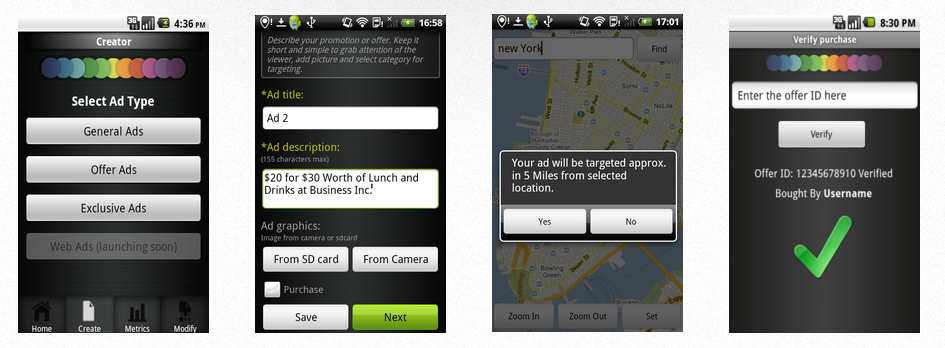
So, with this new funding and a partnership with the Clinton Global Initiative in its pocket, Camber Tech has developed Adlibrium, a local mobile ad and marketing platform that runs on mobile devices — well, initially for free only on Android, with iOS coming in the near future, according to Camber Tech Co-founder and CEO Shaunak Khire.
Essentially the platform, which launches in private beta today, enables small, local businesses and merchants to easily and efficiently create ad and marketing campaigns, offer promotions, deals, and more. Adlibrium wants to encourage these SMBs, that may traditionally struggle to bring offline business online, to get all digital and start connecting and interacting with their customers via a critical access point: their ever-present mobile devices.
Through Adlibrium, merchants and local businesses can create fixed price and time-sensitive local offers and ad campaigns, so in a sense — for those familiar with the space — Adlibrium is a local commerce platform (in app form) that, at its core is a little bit of AdWords and instant offers, with a hint of Lockerz.
Except that, in the case of Adlibrium, one of the nifty features of its ad platform is that it offers businesses the ability to view analytics (like views, calls, location, purchases) and then take that data and use it for re-targeting — right up to the individual impression. Adlibrium enables transactions and verification by allowing merchants to punch in an ID, similar in conceit to GrouponNow, with the main difference being that Adlibrium takes no commissions.
By allowing customers to see an ad, make a purchase on a deal or offer based on that ad, and then allow merchants to track and analyze the data being produced by these interactions (to then allow future retargeting), Adlibrium is making a play at closing the redemption loop, an important goal for local commerce, which my colleague Erick Schonfeld recently wrote about in detail.
What’s more, the platform gives merchants the opportunity to serve three different types of ads or promotions to their customers: General ads (which are text-only); offers; and exclusive offers, which come in the form of, “own this location for a certain period of time”, for example. And distribution of these ads is totally opt-in for customers, which is a nice touch in that it allows customers some control.
For Adlibrium, the goal, then, is not only to offer campaigns that can be controlled in every aspect, be it gender, category, or location, but to work towards closing the redemption loop by allowing merchants to automatically enter customer data into their databases, thus allowing them easy future retargeting through loyalty cards, individual offers, etc.
The other cool feature that helps it go for the close: For every offer a user opts-into, they are rewarded with Adlibrium coins, which can then be redeemed at specific merchants or can be donated to a cause of their choice, so that users have actual cash incentive to donate the virtual currency in a philanthropic way.
This is obviously where the startup’s commitment with the Clinton Global Initiative enters into play, as it not only allows donation of virtual currency, but also gives non-profits a space within the merchant ad unit — if the merchant chooses to associate with a particular cause, of course. But, according to Shaunak, the merchants the team has spoken to thus far are excited about the opportunity to partner with non-profits, especially as they’re creating “cause-aware ads”, which make everyone involved feel a little bit better about online advertising.
Yet ads, coupons, and offers are just the first step for Adlibrium, Shaunak says. The next phase will be to roll out an app that targets advertising and marketing agencies, allowing them to take advantage of the same features available to merchants for their own brands, naturally spreading the reach of Adlibrium’s platform.
But how will the startup monetize its platform, you ask? Because Adlibrium operates on a DIY model, merchants and local businesses download the free app and, similar to Admob, set up an account balance of $10, $50, or $100, which then allows the business to create one of the three types of aforementioned ad campaigns. Adlibrium then charges merchants depending upon the level of targeting and campaign duration they choose. The offers and ads vary from $20 to $1,000, again depending on run-time and targeting.
While there are some fees, Adlibrium has established an interesting model that should be of interest to those local merchants that are wary of the Groupon model’s efficacy in retaining customers after the expiration of an offer or coupon. Because Adlibrium doesn’t charge commission, and provides businesses with sales and analytics metrics, they facilitate easier retargeting and (the hope is) greater retention than services like GrouponNow or LivingSocial Instant.
Camber Tech also recently joined the Mobile Marketing Association, a non-profit entity that represents more than 700 companies in the mobile marketing space. What’s more, Shaunak, at 21, became the youngest member of the MMA’s global board of directors. Not too bad for a 21-year-old.
Having received support from President Clinton and his global initiative, and with the promise of incentives to donate to non-profits and charities baked into the Adlibrium platform, the startup seems well positioned to become a player in the space. Though we’ll have to wait for the iOS apps before we jump to any major conclusions, of course.
For those readers looking to get an early taste of Adlibrium’s beta launch for merchants, click here and enter your email into the “early access” prompt.
And for more info on Adlibrium, check out the video below:
SAY Media, the company that was formed after the merger between VideoEgg and Six Apart, this morning announced its acquisition of Remodelista, a home interiors website targeting home owners and design enthusiasts.
It’s the third acquisition for SAY Media this year, after the digital media company picked up Dogster and digital agency Sideshow.
Remodelista editorial team is led by Julie Carlson and reaches many a interior designer, shelter magazine writer, architect and home design blogger.
SAY Media says it will maintain the Remodelista brand. Terms of the acquisition were not disclosed.
SAY Media is a modern media company designed for a social age. The company enables advertisers to engage today's social consumer through rich content experiences while helping creators monetize...
Internet access, content and online advertising company AOL (which also owns TechCrunch) this morning reported its earnings for the second quarter of the year.
AOL reported a net loss of $11.8 million, compared with a year-ago loss of a little over $1 billion, which had included a major goodwill impairment charge and higher restructuring costs.
Total revenue came in at $542.2 million, down 8 percent compared to Q2 2010. Subscription revenue took another – albeit expected – hit with a 23 percent decrease.
However, advertising revenue (finally) grew 5 percent to $319 million after an essentially flat Q1 2011, notably despite the impact of AOL's exit from certain countries and operations in recent times, with display advertising up a decent 14 percent.
Partially offsetting advertising revenue growth was a decline in search and contextual revenue of $17.6 million, the company said.
In a statement, AOL CEO Tim Armstrong says the company’s return to global advertising growth for the first time since 2008 is another ‘meaningful step forward’ in the comeback of the AOL brand.
That may well be the case, but the road to sustainable profitability is still long.
AOL highlights its Huffington Post Media Group, which saw the number of unique visitors surpass 30 million (“and The New York Times”) in May 2011, according to comScore. User comments on The Huffington Post for Q2 surpassed 12 million, and recently topped 100 million since it was started.
AOL is a global advertising-supported Web company, with display advertising network in the U.S., a substantial worldwide audience, and a suite of popular Web brands and products. The company's strategy...